


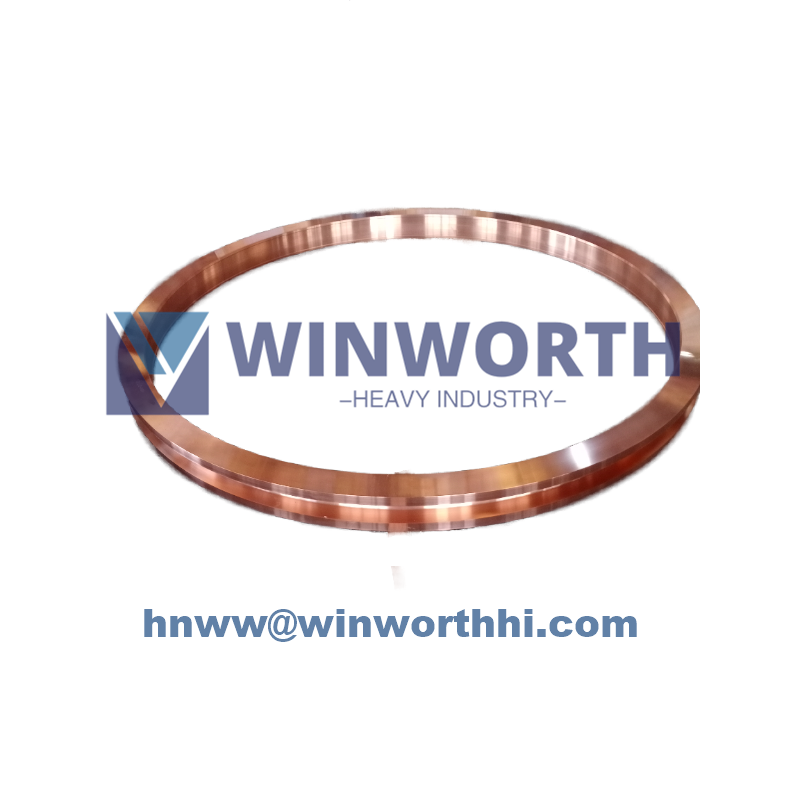
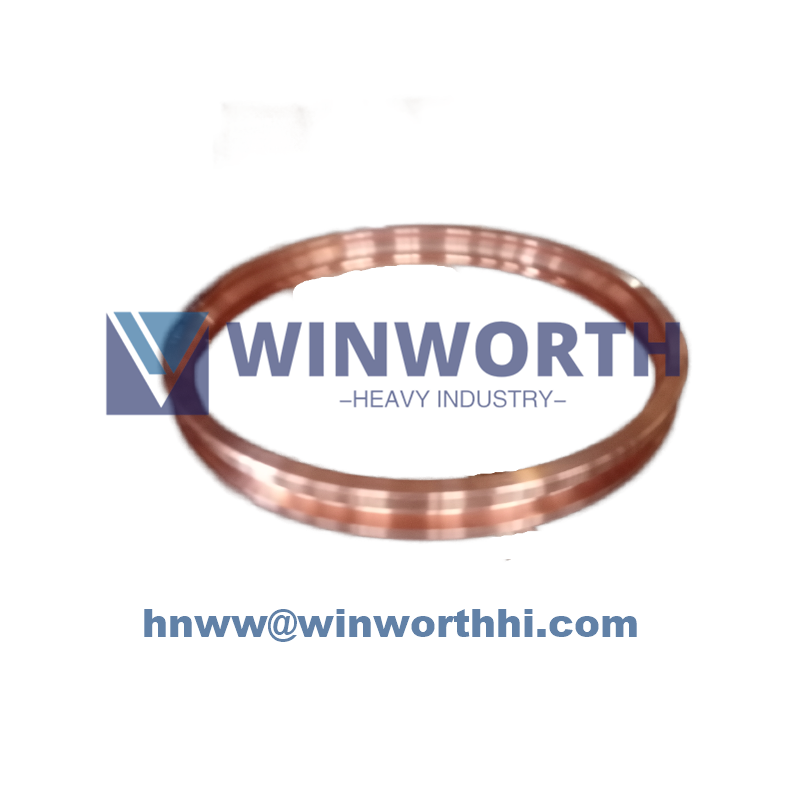
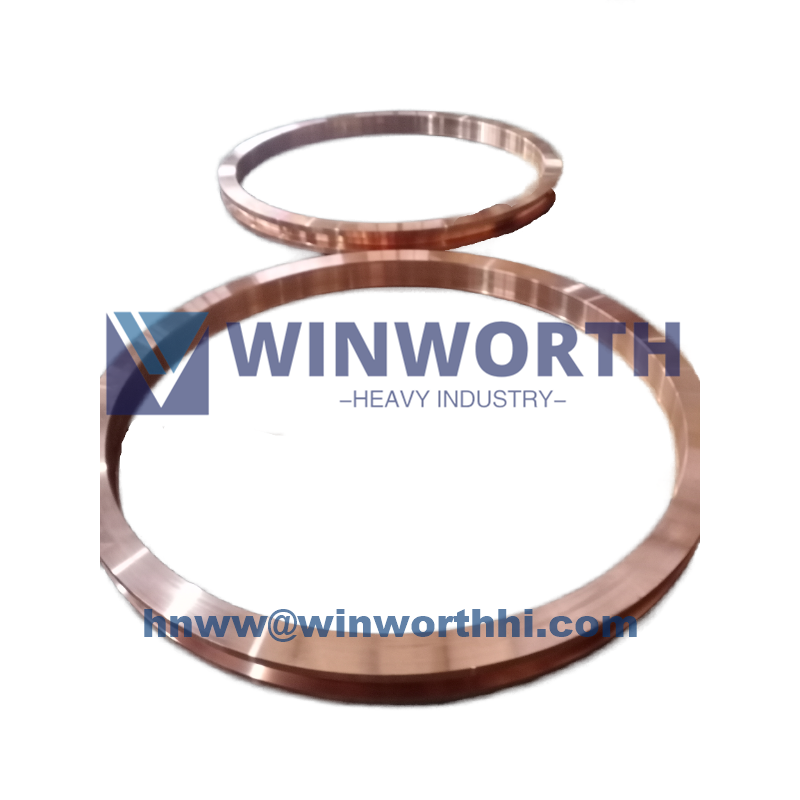
The copper-aluminum continuous casting and continuous rolling chromium-zirconium copper crystallization wheel is a key component in modern continuous production lines, which is directly related to production efficiency and product quality. The following table can enable you to quickly understand its core performance parameters and its advantages over traditional red copper materials.
Performance indicators |
Chromium zirconium copper crystal wheel (Typical value) |
Traditional red copper (T2) crystal wheel |
Performance improvement and significance |
|---|---|---|---|
| Conductivity (IACS% | ≥ 80% | ≥ 99% | It retains most of the electrical and thermal conductivity of red copper, ensuring rapid heat dissipation |
| Softening temperature (℃ | 500 - 550 | About 250 | Significantly enhanced, with extremely strong anti-deformation ability at high temperatures and extended service life |
| Tensile strength (MPa | 390 - 560 | Approximately 295 | It has been enhanced by over 50%, featuring high mechanical strength and excellent resistance to thermal fatigue |
| Hardness (HB | 100 - 125 | Significantly lower than chromium-zirconium copper | It is more wear-resistant and can withstand the friction and mechanical stress of steel strips |
Working principle and core functions
The crystallization wheel is a core equipment component of the continuous casting and continuous rolling production line for copper and aluminum rods, and is sometimes also called the casting wheel. Its working principle is:
During the continuous rotation, high-temperature molten copper or molten aluminum is poured into the grooves on the outer circle of the crystallization wheel.
The interior of the crystallization wheel is filled with forced cooling water (water cooling), which enables the molten metal to rapidly cool and solidify during a rotation of approximately 180 degrees, forming continuous ingots.
Subsequently, this continuous ingot is introduced into a continuous rolling mill for rolling, eventually forming copper or aluminum rod products.
The crystallization wheel is constantly in a cycle of rapid alternation between hot and cold. Its outer side comes into contact with molten metal at over 1000℃, while the inner side is continuously cooled by cooling water. The working environment is extremely harsh, and thermal stress is the main factor leading to its failure. Therefore, it must have excellent thermal conductivity for rapid heat dissipation, as well as superior thermal fatigue resistance to prevent crack formation and deformation.
Advanced manufacturing process
To ensure uniform internal and external performance and long-lasting durability of the crystallization wheel, modern advanced processes mostly adopt composite processing technology:
Core material: Chromium-zirconium copper (CuCrZr) alloy is commonly used. Its typical chemical composition (by weight percentage) is 0.3%-1.5% Cr, 0.03%-0.3% Zr, and the remainder is copper. This material achieves the best balance among strength, electrical conductivity and resistance to softening temperature.
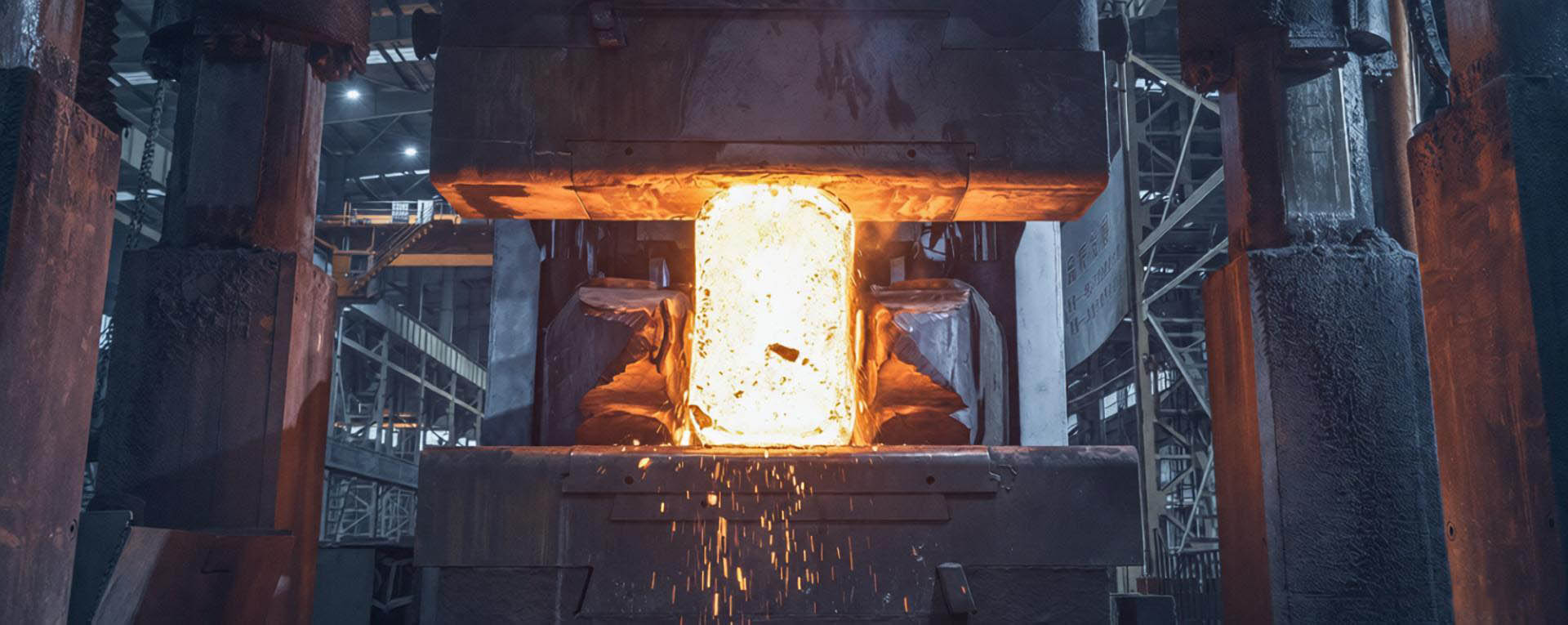
Key processes: The mainstream process route is "vacuum melting → forging/centrifugal casting → hot ring rolling → cold ring rolling → heat treatment". Especially the combined method of hot ring rolling and cold ring rolling can cause the entire cast billet to undergo sufficient plastic deformation, ensuring that the microstructure and properties from the surface to the core are highly consistent. This is crucial for the core area where the crystallization wheel is in direct contact with the high-temperature molten metal.
Near-net forming: An advanced manufacturing concept is to obtain a blank as close to the shape of the finished product as possible directly through rolling, and then the finished product is obtained after a small amount of machining. This method can significantly reduce material waste, enhance production efficiency and material utilization rate.
Structural design features
To enhance heat dissipation efficiency and structural strength, the structure of the crystallization wheel is often specifically designed:
Basic structure: It is usually a large circular ring (with a diameter range from Φ900mm to over Φ3400mm), and the outer circular surface is provided with grooves for forming ingots. The cross-section of the grooves can be trapezoidal, arc-shaped, etc.
Heat dissipation enhancement: In addition to grooves, some high-performance crystallization wheels are designed with pits or spiral heat conduction channels on both sides of the wheel body. This design can significantly increase the contact area with cooling water, accelerate the flow of cooling water, avoid the formation of "dead zones" in water circulation, and thereby greatly improve the heat dissipation effect.
Cross-sectional shape: The annular cross-section of the wheel body may have different structures such as U-shaped, H-shaped or M-shaped, to adapt to different force requirements and installation conditions.
Summary of Performance Advantages
Overall, the main advantages of the crystallization wheel made of chromium-zirconium copper material and manufactured by advanced technology are as follows:
Extra-long service life: Its high strength and thermal fatigue resistance significantly reduce the crack generation rate and the amount of groove shrinkage deformation, greatly extending its service life compared to traditional copper crystal wheels.
Ensuring production efficiency: Its high high-temperature softening temperature and wear resistance enable it to maintain a stable shape during long-term continuous operation, reducing downtime caused by replacement and maintenance, and ensuring safe and efficient production.
Improving product quality: Excellent and uniform thermal conductivity ensures a more stable solidification process of the ingot, which is conducive to obtaining billets with denser crystalline structure and better quality.